Services
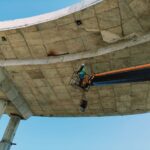
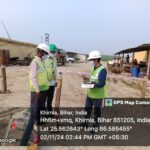
Pile Testing
Pile testing under an NABL-accredited testing setup focuses on controlled testing, calibrated equipment, accurate measurements, and systematic reporting to evaluate pile performance and integrity.
These tests provide valuable engineering inputs for assessing the quality and performance of pile foundations.
Testing with precision. Building with confidence.
e
- Static Pile Load Testing
- Pile Integrity Testing (PIT)
- Dynamic Pile Load Testing
- Lateral Load Testing
- Pull-Out / Uplift Testing
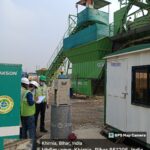
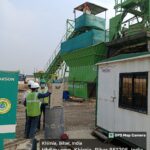
Soil Testing
Every reliable structure begins with a clear understanding of the soil supporting it.
Under an NABL-accredited laboratory/testing framework, soil testing involves systematic sample preparation, controlled test conditions, calibrated equipment, accurate observations, and documented reporting to determine important engineering properties of soil.
Depending on project requirements, the testing scope may include:
Moisture Content Test – Determination of water content present in the soil
Grain Size Analysis – Assessment of soil particle-size distribution
Atterberg Limits – Determination of liquid limit, plastic limit, and plasticity
characteristics Proctor Compaction Test – Evaluation of optimum moisture content and maximum dry density
characteristics Proctor Compaction Test – Evaluation of optimum moisture content and maximum dry density
California Bearing Ratio (CBR) Test – Assessment of soil strength for pavement applications
Specific Gravity Test – Determination of the specific gravity of soil solids
Shear Strength Testing – Evaluation of soil resistance under shear loading
Consolidation Testing – Assessment of soil compressibility and settlement characteristics
Accurate soil testing provides essential engineering data for foundation design, earthwork, pavement construction, quality control, and geotechnical assessment.
At NABTCL, our focus is on precision, consistency, and reliable testing practices that help engineers and project teams make informed decisions.
- Sales
- Tenant Representation
- Acquisitions
- Leasing
Valuation Advisory
Lorem ipsum dolor sit amet, consectetur adipiscing elit. In ligula diam, pellentesque ac euismod in, egestas eget lorem. Maecenas id suscipit massa, non feugiat mi. Fusce rhoncus erat egestas finibus auctor. Donec id nulla at sapien facilisis semper. Nullam faucibus dignissim risus, eu aliquam magna gravida nec.
- Sales
- Tenant Representation
- Acquisitions
- Leasing
Leasing or Buying
Lorem ipsum dolor sit amet, consectetur adipiscing elit. In ligula diam, pellentesque ac euismod in, egestas eget lorem. Maecenas id suscipit massa, non feugiat mi. Fusce rhoncus erat egestas finibus auctor. Donec id nulla at sapien facilisis semper. Nullam faucibus dignissim risus, eu aliquam magna gravida nec.
- Sales
- Tenant Representation
- Acquisitions
- Leasing